WEED/RCR
Robotic Cultivator

Pull weeds.
Stay cool.

A remote-operated extraction rover for desert yards. You sit in the AC with a controller. It sits in 115°F and does the part nobody wants.

RCR v1.0 Live model — drag to orbit
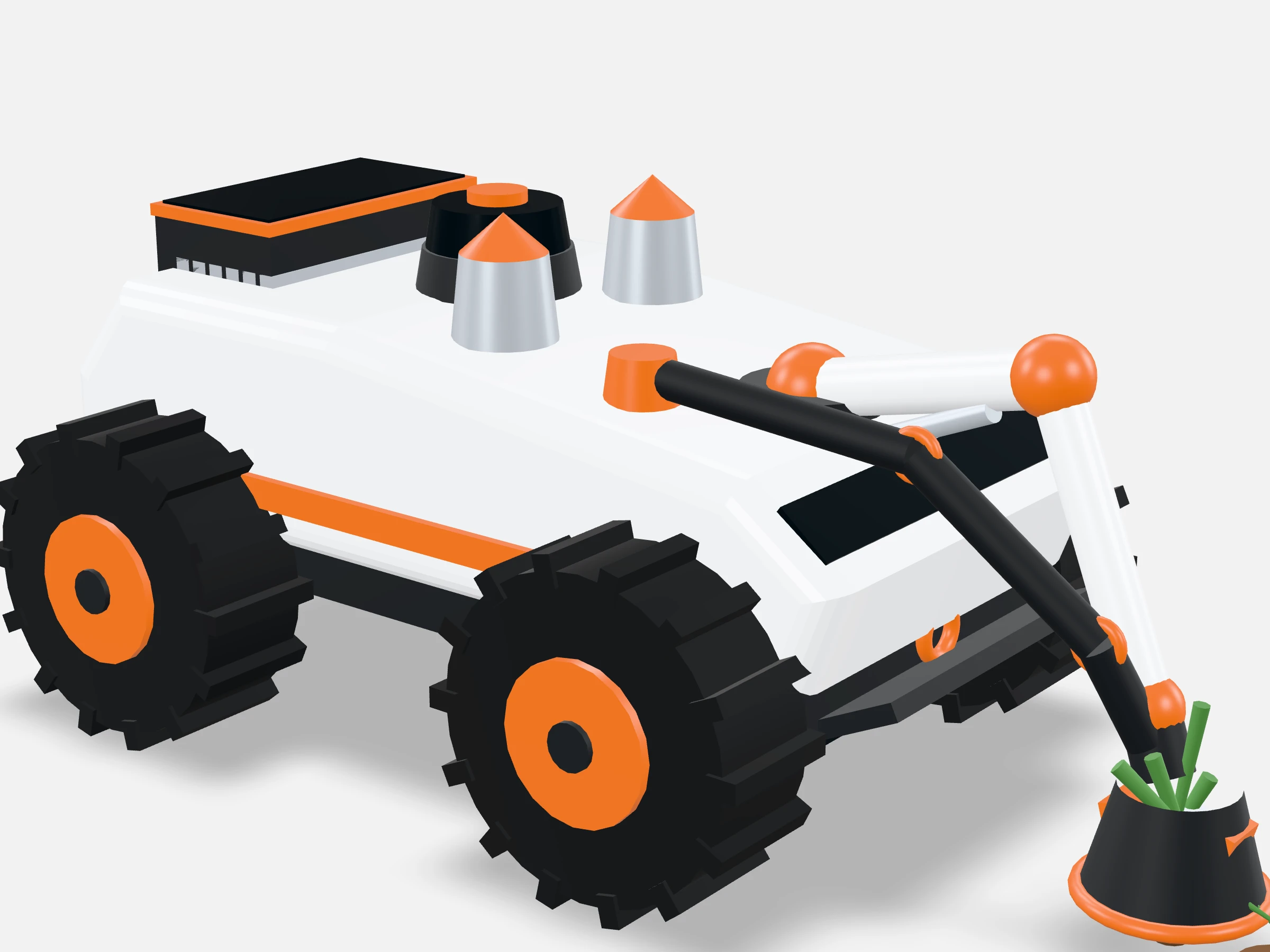
WEED/RCR v1.0 rover, three-quarter view, arm extended over a weed. Drag to orbit
Drive4WD
ControlTeleop
Rated115°F
The problem

Nobody should be pulling weeds
in a Phoenix summer.

Desert yards still grow weeds. Gravel doesn't stop them, monsoon rain feeds them, and the HOA letter arrives regardless of what the thermometer says. The work is miserable, it's expensive to hire out, and for a few months a year it's genuinely unsafe. The weeds don't care. Neither does the RCR.

115°FSustained operating target — the design constraint everything else answers to
0Minutes you spend outside
4WDIndependent hub motors, skid-steer, flat belly for gravel
2–6Neighboring homes per deployment — we service the street, not the house
How it works

Drive it. Point it. Done.

Extraction, not hand-mimicry. No delicate robot fingers to break — suction lifts the canopy and loosens the soil grip, an auger breaks the taproot, and the whole plant goes to the hopper.

Deploy01

Rover to the yard

The unit goes out. You don't. FPV camera on the nose, 360° sensor puck on the deck, driven from a controller anywhere with a connection.

Extract02

Bell down, auger in

Line up the weed and commit. The suction bell draws the canopy up, the centered auger takes the root, and cyclonic separation drops pebbles back where they belong.

Batch03

Let it run the pass

Mark the candidates, let the RCR work the batch, and take over whenever you want. Every pull is logged — species, soil, force, conditions.

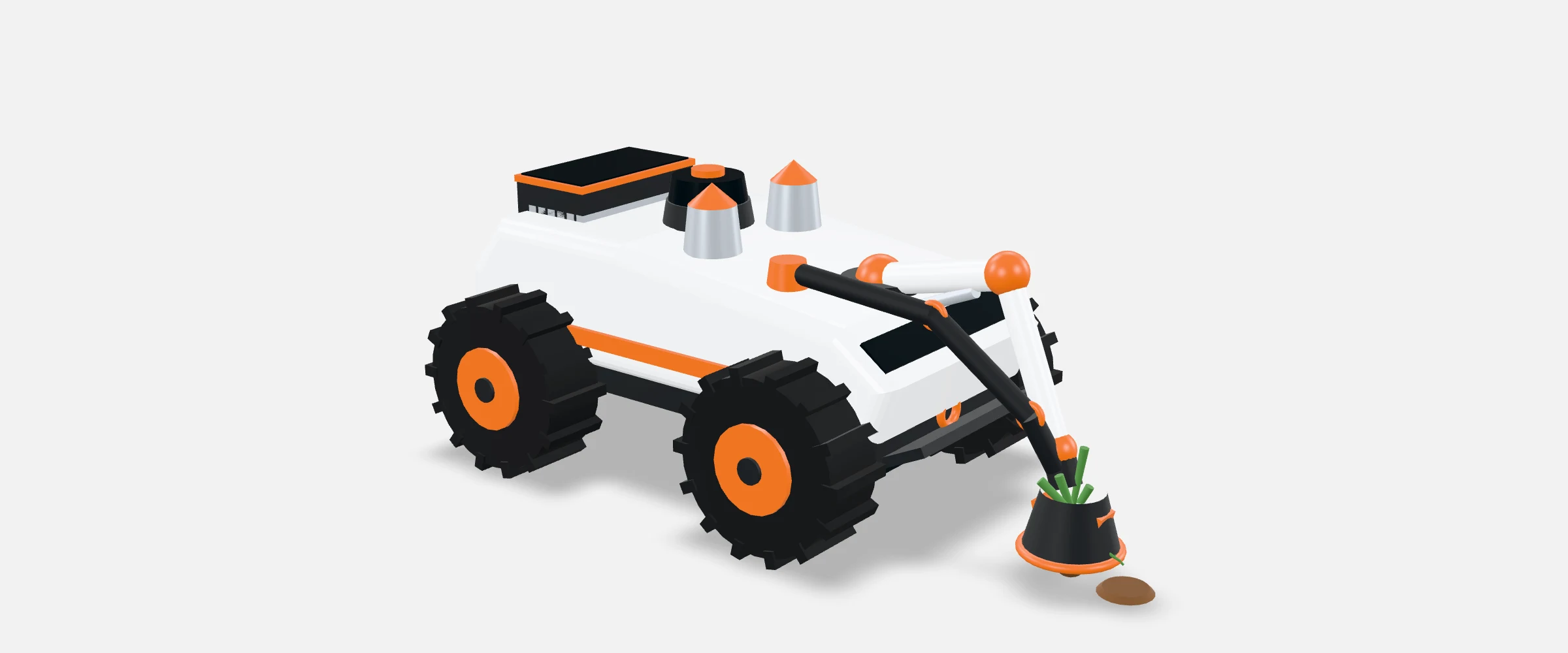
WEED/RCR v1.0 rover in profile, extraction arm lowered over a weed.
RCR v1.0 — general arrangement Robotic Cultivator · Born for the heat
Specification

Built like equipment,
not like a gadget.

Sealed heat-shield-white monocoque. Everything bolts to a single flat chassis pan. Square corners, no cab, no cosmetic windshield — the strip across the nose is the perception array, and it's there because it does something.

Straight answer: the RCR is in active prototype development. Every figure below is a design target, not a measured result. When we have bench numbers, we'll publish those instead — with the test conditions attached.

RCR v1.0 — design targets
Envelope65 × 42 × 35 cm
Mass15–20 kg Target
Drivetrain4× independent hub motors, skid-steer
ExtractionSuction bell + centered auger
Arm reach~35 cm, 2-segment turret Target
SeparationTwin deck cyclones, rear pebble ejector
PerceptionNose depth strip + 360° puck, GPS
ControlTeleop / FPV, operator-supervised batch
ThermalSustained ops at 115°F Target
PowerHot-swap pack, 1–2 h Target
General arrangement RCR v1.0 — profile, concept
~65 CM
ExtractionBell + auger
SeparationTwin cyclone
IntakeBelly slot
v1.1 — limited run

The Exterminator

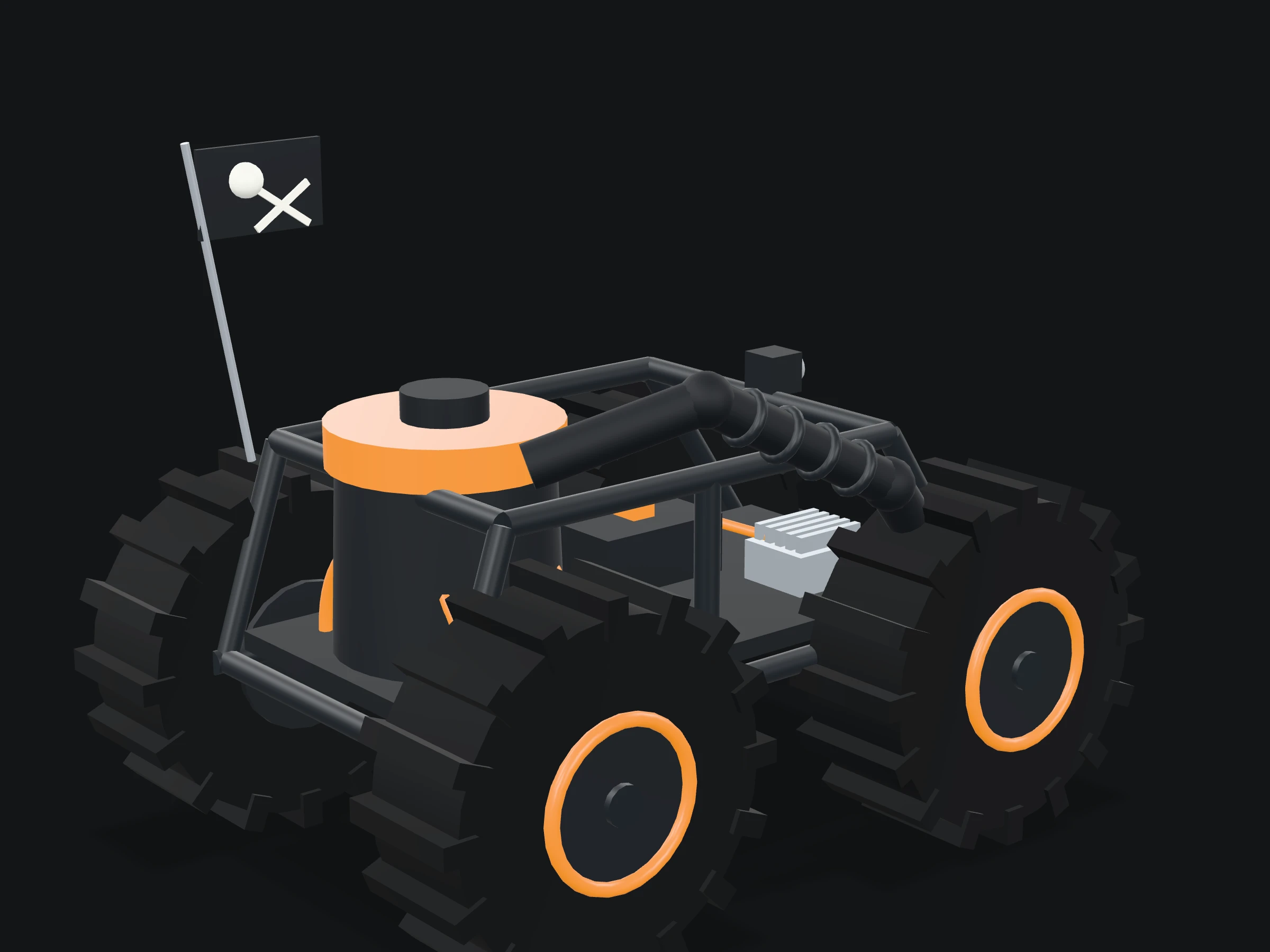
Before the sealed white one, there's the ugly one. Exposed tube frame, a shop-vac strapped to the deck, a fixed boom instead of an arm, and a jolly roger on the whip antenna. It's loud, it's raw, and it works.

Built in small numbers, priced like the hand-built machine it is, and never going into mass production. If you want the first one that pulls weeds, this is it.

Frame
Powder-coat tube
Suction
COTS shop-vac
Head
Fixed boom nozzle
Optics
Roll-cage FPV
Livery
Murdered-out
Run size
Limited
Get on the drop list
The Exterminator v1.1, three-quarter view on black. Drag to orbit
Waitlist

Born for the heat.

Arizona first. Drop your email for build updates, bench-test numbers, and first access when units are available.

No spam. Build updates and launch only.